
Popular Science
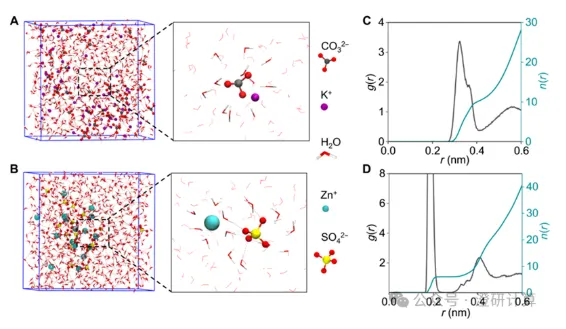
Why is calculating the electrolyte molecular weight (MD) so expensive? What data do I need to prepare before hiring someone to do it? What results can I expect?
Read OriginalAnyone who has used agencies to perform electrolyte kinetic simulations knows that calculating the molecular dynamics (MD) of an electrolyte typically costs several times more than calculating binding energy, electrostatic potential, adsorption energy, and other parameters.
Many people think that MD simulation is simply running a testing software program—you input molecules, click "Run," and get the graph. However, in reality, there's a lot of preparatory work required before "Running." How much work is involved, what data needs to be prepared before hiring someone to perform the calculation, and what results can you get afterward? This article will provide a detailed explanation.
Read OriginalMany people think that MD simulation is simply running a testing software program—you input molecules, click "Run," and get the graph. However, in reality, there's a lot of preparatory work required before "Running." How much work is involved, what data needs to be prepared before hiring someone to perform the calculation, and what results can you get afterward? This article will provide a detailed explanation.
Popular Science
Beyond MD, what else can be calculated for electrolytes? Understanding metadynamics through three top-journal papers
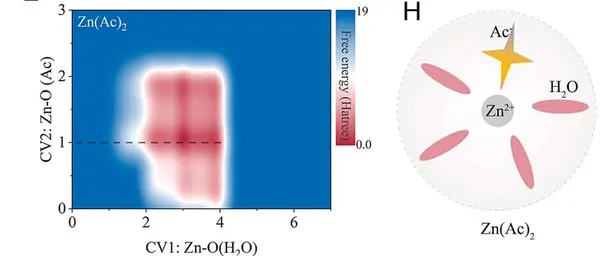
Read OriginalIn theoretical calculations of electrolytes, conventional MD can provide the RDF, coordination numbers, and solvation structure, but many questions remain unanswered: whether a given coordination is truly stable, which ligands leave first when an ion approaches the electrode, and how high a barrier electrolyte decomposition must cross. Metadynamics can help the system escape locally stable structures and obtain a free-energy surface, which can be used to identify stable structures, conversion pathways, and reaction barriers. This article selects three top-journal papers to illustrate its uses in electrolyte research: judging stable coordination, resolving interfacial desolvation, and calculating decomposition-reaction barriers.
Read Original