
Catalytic
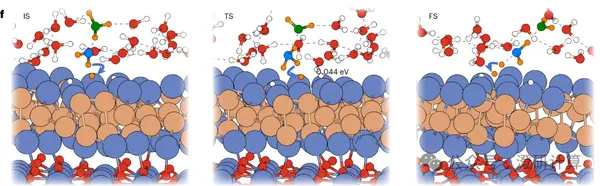
Nature Materials: Thin-shelled RuP2/RuO2 fabricates a near-Pt-like HER, theoretical calculations reveal the interfacial water and proton transfer mechanism
PEM water electrolysis highly relies on Pt and Ir-based electrocatalysts, but the high cost and resource constraints of precious metals limit the large-scale application of such systems. A Nature Materials paper by the teams of Mingfei Shao from Beijing University of Chemical Technology, Lei Wang from the National University of Singapore, and Xin Liu from Harbin University of Science and Technology describes the development of a non-platinum catalyst composite material—a Ru-based core-shell catalyst with a RuO2 core/RuP2 shell—which exhibits HER activity close to that of Pt/C in acidic media, and further validates its application in PEM electrolyzers.
Read Original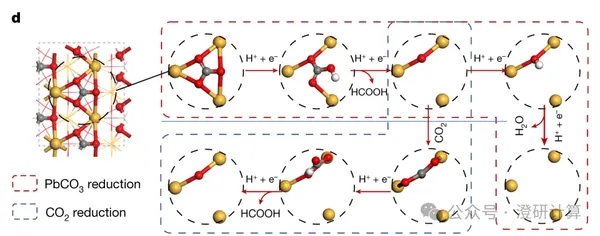
Catalytic
Xia Baoyu, Nature: CO2 to formic acid conversion in acidic PEM stabilizes for 5200 hours; theoretical calculations reveal dynamic Pb–PbCO3 interface mechanism
CO2 electrolysis under PEM conditions must simultaneously achieve high carbon utilization, high selectivity, and long-term stable operation. A Nature paper by Xia Baoyu's team at Huazhong University of Science and Technology demonstrates the direct conversion of CO2 to formic acid in acidic PEM, achieving a formic acid Faradaic efficiency of over 93%, a single-pass conversion rate of approximately 91%, and continuous operation for 5,200 hours at 600 mA cm⁻².
Read Original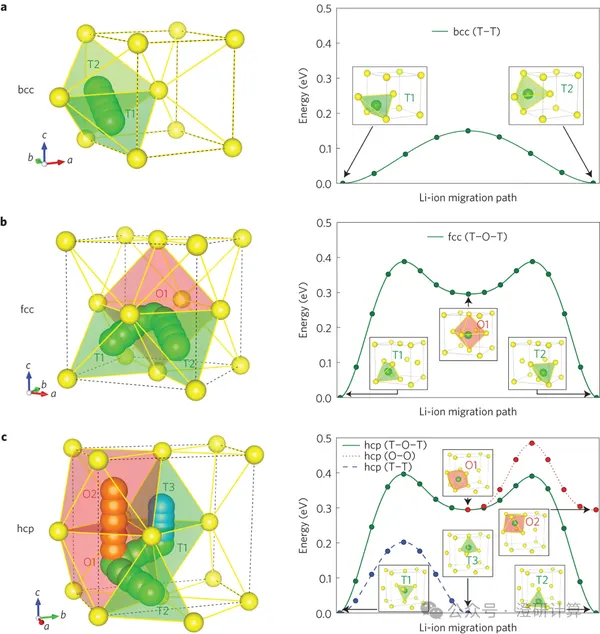
Ion Diffusion
How is ion diffusion calculated? G Ceder interprets classic Nature Materials data
Ion diffusion is a type of calculation frequently used in papers on solid-state electrolytes, positive and negative electrode materials, and interfacial transport. The ion diffusion energy barrier, as commonly discussed, essentially calculates how high an energy peak an ion needs to traverse along the lowest energy path to move from one stable position to another. The smaller this value, the easier the ion typically migrates, and the faster the diffusion.
Read Original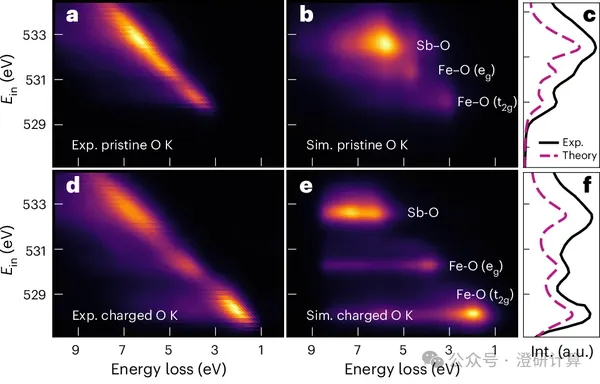
Battery
Nature Materials: Iron-based cathode achieves high-valence FeIII-V redox; theoretical calculations reveal 3d⁵L² negative charge transfer state
Iron-based cathode materials are inexpensive and abundant, but the commonly used FeII/III redox potentials are limited. To further increase the voltage, it is necessary to move to the redox potentials of higher valence iron (FeIII and above); the difficulty lies in the fact that higher valence Fe is usually unstable and easily accompanied by oxygen oxidation, O–O dimerization, and voltage hysteresis.
Read Original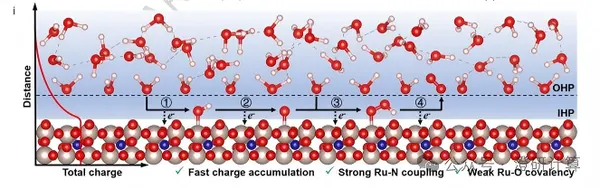
Catalytic
Nat. Commun.: Seven in one, four in communication. PEM electrolysis of water
PEM water electrolysis anodes require long-term oxygen evolution under strong acid and high potential. Ir-based catalysts have good stability, but are expensive and resource-limited; RuO₂ has high activity and relatively low cost, but high-valence Ru is easily further oxidized and dissolved, and the participation of lattice oxygen can also accelerate structural degradation.
Read Original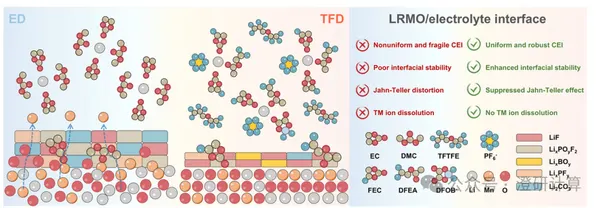
Battery
Gangcheng Da Liuqi AM: What calculations can be performed by regulating the CEI of the positive electrode with electrolyte?
Electrolyte-mediated regulation of the cathode/CEI can be calculated along two lines: first, where does the CEI come from and can it protect the cathode surface; second, whether electrolyte molecules will further affect the Mn–O local structure and Jahn–Teller distortion.
Read Original